


You’re not in a price war. You’ve accidentally made yourself a middleman.
Competitors undercut you on blended classes, so your instinct is to drop price. But price isn’t the problem. When students book with you, they experience a coordinator, not a creator. And you can’t charge premium for coordination.

Three Ways You’re Structurally a Middleman
Worst case: “Go buy the online course yourself here.”
You send students to the agency platform before or right after they pay you. They see the American Heart Association or Red Cross as the real provider. You’re just the skills-check location.
When students can go directly to the source, what are you competing on? Location and price. That’s it.
Second-worst: “You’ll get an email from [other company] in 24 hours.”
Student pays you. Then waits. The online access—the thing they just paid for—comes from a completely different company’s email system and portal.
The critical part of their experience happens somewhere else, under someone else’s brand. You look like what you are: someone coordinating pieces, not creating an experience.
Best you have without modern infrastructure: Automated but still fragmented.
At least it’s automated through legacy tools. But it’s still: “Wait for an email. Check spam. If you don’t get it, it’s not our fault.” You’re patching a broken experience with legalese and reminder spam.
Different workflows, same outcome: you expose all the seams, so students see a coordinator, not a creator.
When you use separate sites, separate emails, and separate brands for one class, you look “pretty much the same” as everyone else. And when you look the same, they shop on price.
When Students See the Seams, They Devalue Your Role
Here’s why this destroys your pricing power.
The CPR card is identical. The dream outcome is the same, so it cancels out. The only variables left are time delay and effort. You’ve maximized both, so the only lever left is price.
Student pays you → waits 24 hours → hunts through spam folder → coordinates access across multiple systems → shows up hoping they completed the right parts.
You’re competing only on the skills check now—lowest price, most convenient location. You’ve given away all your differentiation.
The competitive trap gets worse:
Send students to buy codes themselves, and they might discover a more convenient provider while they’re there. The agency platform routes them based on location—you could lose them before class even starts.
Or they come to you once, realize the first step is “go to this other website,” and next time they skip you entirely. Why deal with the middleman when they know where the source is?
This gets even worse in B2B contracts.
Corporate training is about reducing coordination burden for employers. They need seamless multi-student experiences with visibility into who’s compliant.
If you can’t even deliver online codes seamlessly for individuals—if your checkout sends them on a scavenger hunt—how are you supposed to handle corporate complexity?
You’re signaling: “I can’t handle premium work.”
The Restaurant Scavenger Hunt
Imagine you book a nice dinner. You pay the restaurant. Then the host says:
“Great. In the next 24 hours you’ll get three separate emails. One tells you where to pick up your appetizer. Another tells you where to get your entrée. Another sends you to a different location for dessert. Check your spam folder if you don’t see them. And make sure you bring proof you got each one.”
No one pays premium for that. They pay minimum, if anything.
Now imagine the opposite: same restaurant, but it uses OpenTable. You reserve once. Show up once. Everything from reservation to dessert is handled under one brand. You don’t care that OpenTable exists—it’s invisible. You feel like one restaurant took care of everything.
Owning the experience means your student feels like that OpenTable dinner: one reservation, one brand, everything just handled.
What This Actually Looks Like
Owning the experience doesn’t mean becoming a tech company. It means the student never feels like they’ve left your world, even if purpose-built infrastructure is doing the heavy lifting behind the scenes.
What that looks like:
One URL to start (examplecpr.com)
One branded checkout (clearly your company)
One portal for instant access (no 24-hour wait, no inbox hunt)
One thread of communication
One place for roster tracking, reminders, and certs
Premium is a math problem, not a vibe problem.
You justify premium pricing by collapsing time, reducing effort, and increasing certainty that everything “just works” from checkout to card in hand.
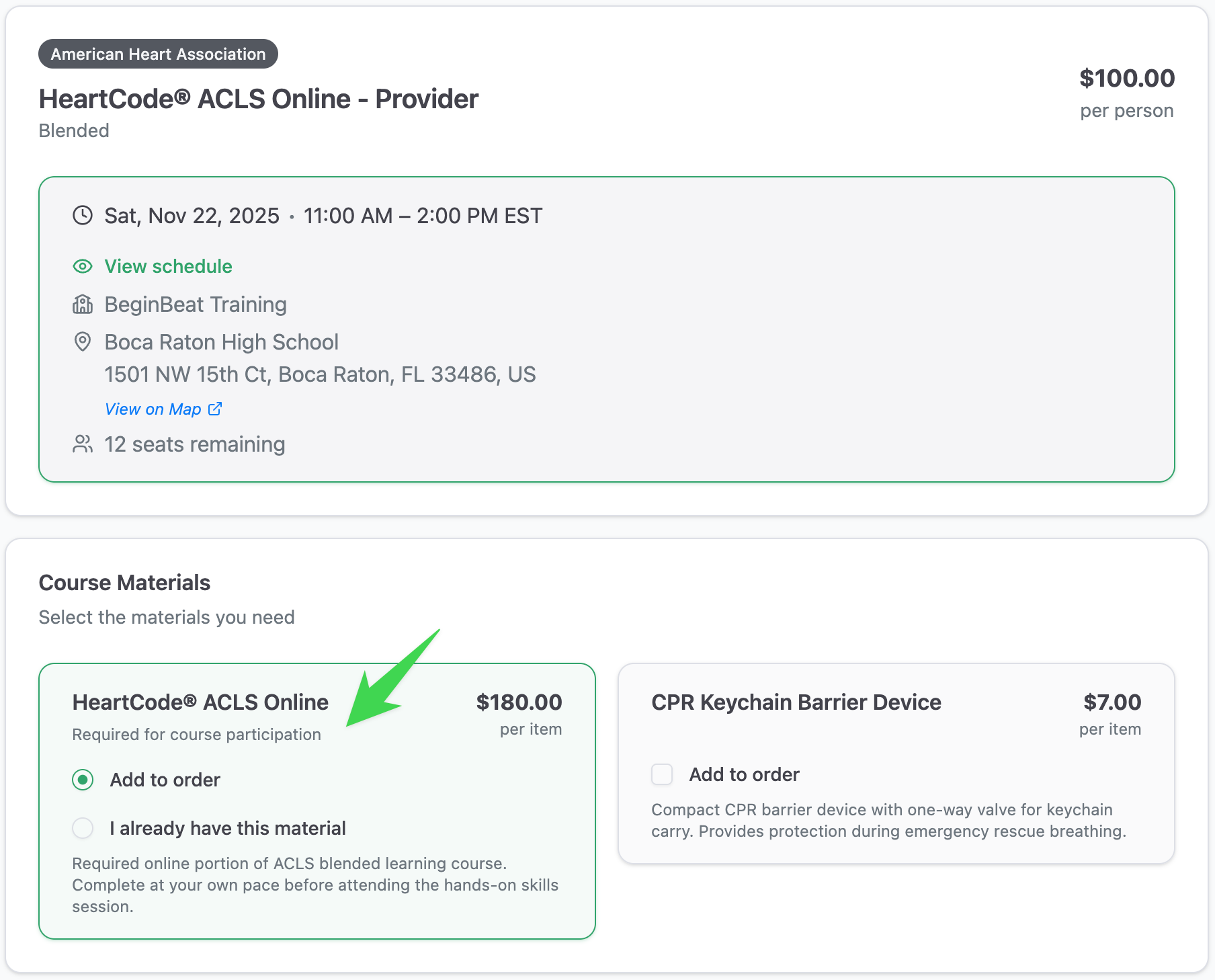
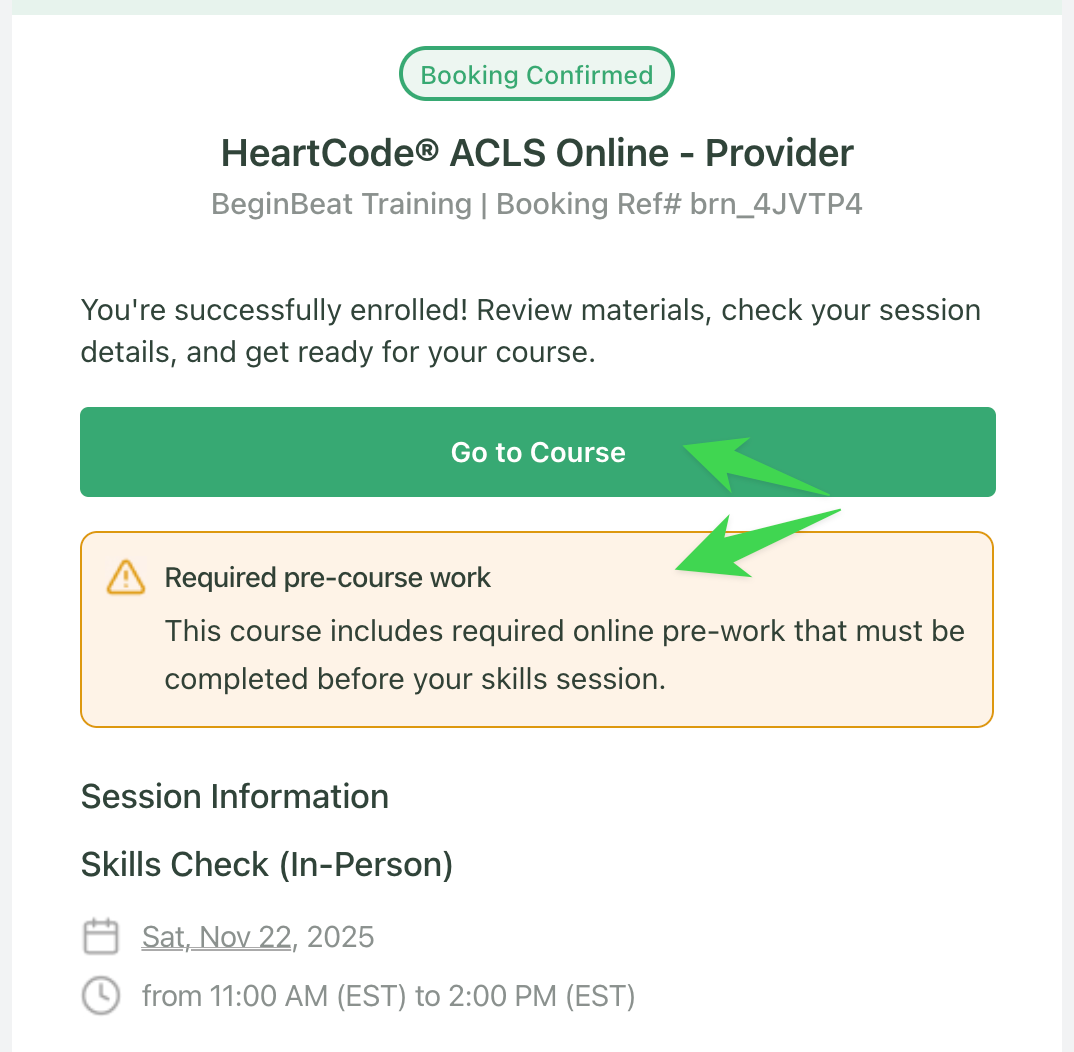
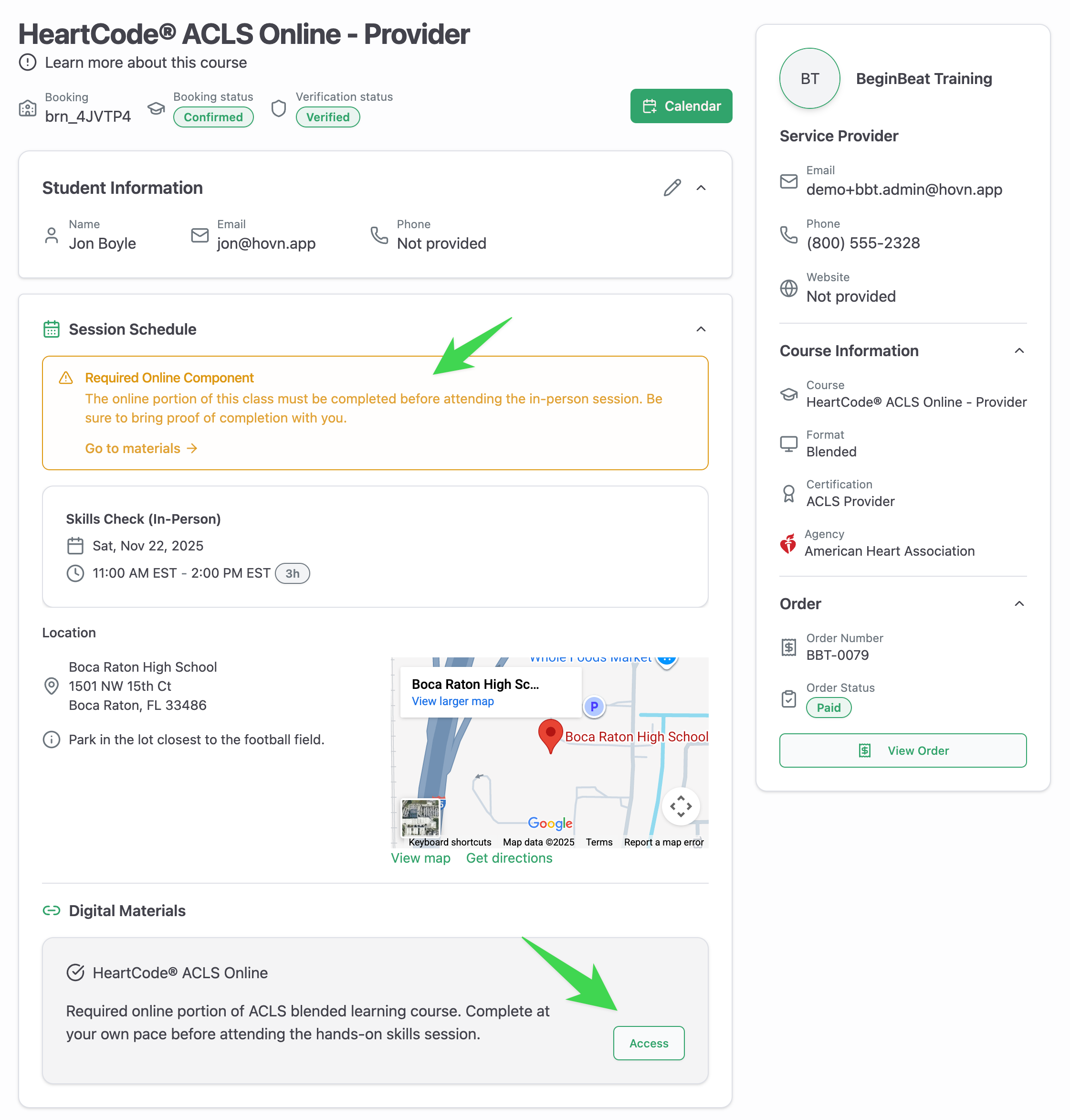
Here’s the difference in three screens:
Screen 1: Checkout includes required online portion with “I already have this” option—no surprises.
Screen 2: Instant confirmation email with defined requirement and “Go to Course” button—inbox, not spam.
Screen 3: Your student portal with one-click access to materials—everything in one place.
The setup takes minutes.
Creating this experience doesn’t require custom development. You:
Select “blended” format course
Add your digital materials
Purchase codes in bulk
Drop them into the platform
Done. Every student who books gets this seamless experience automatically.
Blended Is Now Standard—Your Infrastructure Decides Your Lane
This isn’t a nice-to-have anymore.
The AHA is continuing to push more digital delivery. Blended learning is becoming standard offer. RQI is expansion will prioritize online learning. Hospitals and corporate clients expect seamless experiences.
You’ve got two paths:
Stay a middleman → Stay in the price war. You’re competing only on skills-check delivery. Lowest price wins.
Own the experience → Move to a category of one. You can charge premium because you’re delivering the whole experience, not coordinating parts.
The gap is widening right now.
Providers who figure out premium delivery first will capture premium pricing and corporate contracts while everyone else is still trapped in coordination mode.
First movers get the rankings, the reputation, the leverage. Late movers spend years trying to catch up—competing on price because that’s all they have left.
Before You Drop Your Prices Again, Book a Middleman Audit
Don’t lower your price trying to compete. Figure out why you can’t charge premium in the first place.
Book a demo with us. We’ll show you where you look like a coordinator instead of a creator, and what changes when you own the experience end-to-end.
This isn’t about switching platforms just to switch. It’s about understanding the math: why you can’t charge premium when students see all the seams, and what changes when you own the whole experience.
Want a second set of eyes on your operation? 15 minutes. We review your setup. You walk away knowing what to fix first.